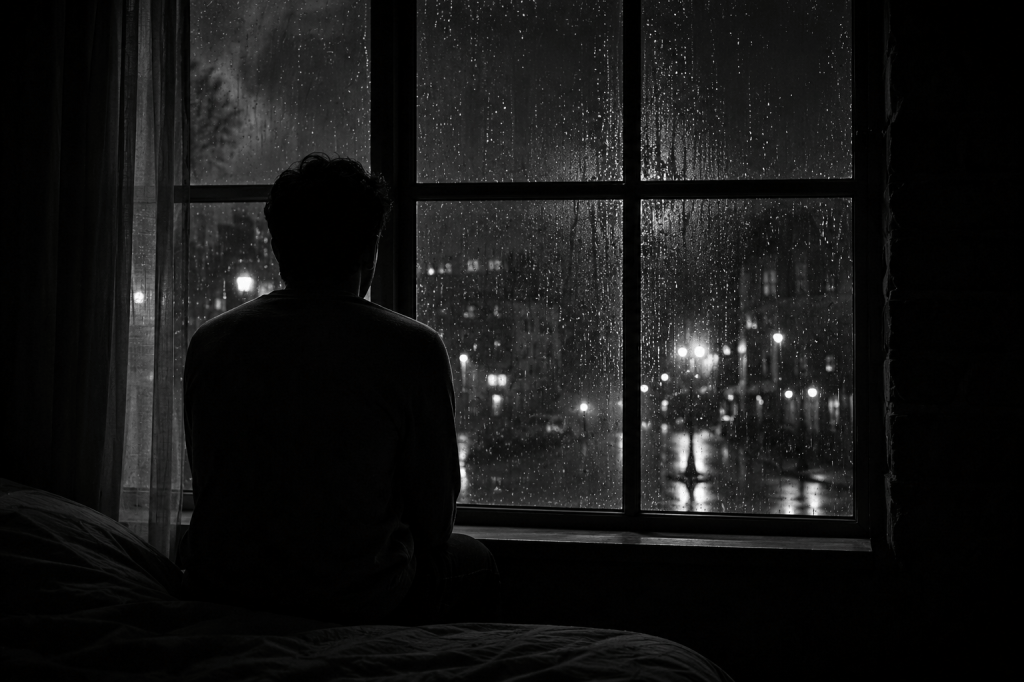
• Never Forget

    Twenty-five years.

    It’s strange how a date can become more than a date.

    September 11 comes around every year, and for a moment, I remember where I was. I remember the confusion. The images on television. The feeling that something had changed, even though none of us knew yet just how much.

    A whole generation has grown up knowing 9/11 only as history.

    For some of us, it isn’t history.

    We remember an ordinary morning becoming something else.

    We remember watching strangers run toward people they had never met.

    We remember names and photographs replacing numbers.

    And maybe that’s what I want to hold onto tonight.

    Not the hatred that caused that day.

    The humanity that answered it.

    Twenty-five years later, the world is still complicated. We still disagree. We still divide ourselves into sides far too easily.

    But I’d like to believe that somewhere beneath all of that, we still have the capacity to run toward one another when it matters.

    Tonight, I remember those who never made it home.

    And I’m grateful that I did.

    — Rowan Vale

  • Still In Service

    She knew the number didn’t belong to him anymore.
    Or at least she knew it probably didn’t.
    Three years was a long time for a phone company to leave a number sitting around unused. She understood that. She wasn’t stupid.
    But his name was still in her phone.
    Daniel.
    No last name. No heart beside it. No old photograph.
    Just Daniel.
    She’d never deleted the contact because deleting it felt unnecessarily cruel. As if grief hadn’t already taken enough without asking her to press a button and help it finish the job.
    So she left it there.
    For the first few months after he died, she called just to hear his voicemail.
    “Hey, it’s Daniel. You know what to do.”
    She did know what to do.
    She’d heard it a thousand times when he was alive.
    Then one afternoon she called and the recording was gone. A mechanical voice told her the number was no longer in service.
    She never called again.
    But sometimes she texted.
    The first time was six months after the funeral.
    The kitchen sink was leaking. Daniel had fixed that stupid sink at least four times and insisted every time that it didn’t need replacing.
    She stood barefoot in a puddle of water, grabbed her phone and typed:
    You were wrong about the sink.
    She stared at the message for a long time before pressing send.
    It didn’t bounce back.
    That surprised her.
    After that, she did it occasionally.
    Emily got the teaching job.
    Your Braves blew another one.
    I finally got rid of that ugly chair.
    Sometimes months passed between messages.
    Sometimes only days.
    She never expected an answer. That wasn’t the point.
    It was simply somewhere to put things that still belonged to him.
    On what would have been their thirty-second anniversary, she poured herself a glass of wine and sat on the back porch.
    She had made it through the day surprisingly well.
    Emily called that morning. Her sister took her to lunch. A neighbor brought over a piece of chocolate cake without mentioning why.
    Everyone remembered.
    That somehow made it worse.
    By eleven that night, the house was quiet.
    She picked up her phone.
    Daniel’s name was still near the top of her recent messages.
    She opened it.
    There they were.
    Three years of little pieces of a life he hadn’t gotten to see.
    She read some of them and smiled.
    Then she reached the last one she’d sent, nearly four months earlier.
    I had a good day today. I wish you were here for it.
    She hadn’t cried when she wrote that one.
    Tonight was different.
    She typed slowly.
    I don’t know how long I’m supposed to keep doing this.
    She stopped.
    Then added:
    Sometimes I think I’m getting better. Then something happens and you’re the only person I want to tell.
    She pressed send.
    Almost immediately, three little dots appeared beneath the message.
    She froze.
    The dots disappeared.
    Then came back.
    Her heart began pounding hard enough that she could hear it.
    A message appeared.
    I’m sorry. I think you have the wrong number.
    She stared at the screen.
    Of course.
    She knew this would happen eventually.
    Numbers got reassigned. Life moved forward. Phone companies certainly didn’t care about widows who occasionally needed somewhere to send messages.
    She should have stopped a long time ago.
    Her face grew hot with embarrassment.
    She quickly typed:
    I’m so sorry. This used to be my husband’s number. He died three years ago. Please ignore me.
    She pressed send and immediately wished she hadn’t explained.
    The three dots appeared again.
    Then disappeared.
    Then appeared again.
    No need to apologize.
    She waited.
    Another message came.
    I’ve had this number about six months. I wondered who Daniel was.
    She covered her mouth.
    Six months.
    She thought about everything she’d sent during that time.
    Thankfully, there hadn’t been much.
    The dots came back one more time, and stayed a little longer than before, as if he were choosing the words carefully.
    He sounds like someone worth missing.
    That did it.
    She put the phone down and cried.
    Not the terrible kind of crying from those first months when grief felt like something physically tearing through her chest.
    This was quieter.
    She cried because a stranger knew Daniel’s name.
    She cried because somewhere in the world was a person who had accidentally received tiny pieces of him.
    She cried because for three years she had been sending words into what she thought was an empty room.
    And apparently, for the last six months, someone had been there.
    After a while she picked up the phone.
    He was.
    She hesitated, then typed one more.
    Thank you.
    The answer came a moment later.
    You’re welcome. Take care of yourself.
    She set the phone beside her and finished her wine.
    The next morning, she opened her contacts.
    She found Daniel.
    Her thumb hovered over his name.
    For three years she’d imagined this moment. She thought someday healing would mean being able to press Delete without crying.
    But looking at his name, she realized something.
    She didn’t have to delete him.
    Daniel had been her husband for thirty-one years. His name belonged in her life whether the number underneath it worked or not.
    So she didn’t delete the contact.
    She simply removed the phone number.
    The screen asked if she wanted to save the changes.
    She smiled.
    “Yes.”
    Daniel was still there.
    Just not somewhere she could call anymore.

  • Back Row

    He hadn’t been inside a church in eleven years.
    Not for worship, anyway.

    There had been funerals. His mother’s. An old friend’s.

    Once for a wedding where he sat near the back and slipped out before the reception because he couldn’t think of anything to say to people who remembered who he used to be.

    But Sunday morning was different.
    He almost kept driving.

    The little brick church sat between a Dollar General and an empty field, its white steeple rising above a parking lot already half full.

    He didn’t know anyone there.
    That was the point.

    He parked near the road, where leaving would be easy.
    Inside, a woman standing at the door smiled and handed him a folded bulletin.
    “Good morning.”
    “Morning.”
    That was enough conversation.

    He chose the last row.
    For twenty-five years, he’d sat at the other end of the room. On platforms. Behind pulpits. Beside communion tables. He’d prayed with grieving mothers and scared teenagers. He’d stood beside hospital beds and told people God was with them when he wasn’t entirely sure anymore what that meant.

    Once, people had called him Pastor.
    Now most people just called him by his name.
    He preferred it that way.

    The music started.
    He didn’t recognize the first song, which was a relief.
    The second one he knew.
    His throat tightened before they reached the chorus.
    He stared at the floor.
    Funny how the body remembers things the mind has worked very hard to forget.
    Around him, people sang about grace.
    He wondered if they knew how dangerous a word like that could be.

    Grace had once meant something simple to him. Something he could explain with three points and a closing illustration.

    Then life happened.
    People happened.
    Church happened.
    He happened.
    Grace became harder to explain after that.
    Maybe that’s why he came.

    He wasn’t looking for answers. He’d had enough answers to last several lifetimes.

    He wasn’t looking to come back. He wasn’t even sure what “back” would mean.
    He just wanted to know if he could sit in a room like this again without being angry.
    Or afraid.
    Or wanting to run.
    The congregation stood for another song.
    He stayed seated.
    Nobody seemed to care.
    That helped.
    Then an older man across the aisle caught his eye.
    For half a second, panic moved through him.
    Recognition.
    But the man only smiled.
    Not the exaggerated church smile he’d learned to distrust. Just the small, ordinary smile one stranger gives another when their eyes accidentally meet.
    He smiled back.
    Barely.
    It surprised him.

    The pastor walked to the pulpit.
    He was younger than expected. No suit. No booming voice. No theatrical pause while everyone settled.
    He opened his Bible and said, “Some of you almost didn’t come this morning.”
    The man in the back row looked toward the door.
    Of course.
    Here we go.

    “Maybe church hasn’t always been a safe place for you.”
    His hand tightened around the bulletin.
    “You don’t owe anybody your story. You don’t even owe us another Sunday. But while you’re here, I hope you’ll let yourself rest.”

    That was it.
    No altar call.
    No guilt.
    No demand that the wounded forgive the people who hurt them before lunchtime.
    Just rest.

    He made it another twelve minutes.
    Then he quietly stood.
    The woman at the door saw him leaving.
    For one terrible second he expected her to ask if everything was okay.
    Instead she opened the door for him.
    “Have a good day.”
    “You too.”

    Outside, the sun was brighter than when he’d gone in.
    He reached his car and sat behind the wheel.
    He didn’t start it.
    For several minutes he just sat there with both hands resting in his lap.
    Then he noticed he was still holding the bulletin.
    He almost laughed.
    Eleven years.
    Twenty-eight minutes.
    That was enough.
    He started the car and pulled toward the road.
    He didn’t know if he’d ever go back.
    For the first time, he realized he didn’t have to know.
    And somehow, that felt a little like grace.

    Rowan Vale ~

  • Some People Make the World Softer

    I didn’t know Dolly Parton.

    So I’m not going to write as though I lost a friend today.


    I was just one of millions who watched her, listened to her, laughed with her movies, and occasionally found myself smiling when one of her songs came through the speakers.

    But there’s something strange about losing people like that.

    They become part of the background music of our lives without ever knowing our names.

    And Dolly always seemed to make the world feel a little less mean.

    She didn’t need everyone to think like her before she’d love them. She didn’t seem particularly interested in deciding who deserved a seat at the table. She just kept making music, telling stories, helping people, laughing loudly, and being unapologetically herself.

    There’s already enough darkness in this world.
    Today we lost somebody who seemed determined to add a little light to it anyway.

    I’ll miss knowing she was out there. ❤️

    — Rowan Vale

  • Journal Entry

    Some nights, sleep just evades me. My body is tired, the room is quiet, and there is absolutely no reason to still be awake. But my mind apparently didn’t get the memo. So here I am, somewhere between yesterday and tomorrow, listening to the silence and waiting for my thoughts to finally grow tired too.

    -Rowan Vale

  • Journal Entry

    There are parts of ourselves we show the world.
    And then there are the other parts.
    The thoughts we stop before they reach our mouths. The questions we learned not to ask. The desires we keep private. The anger we swallow because we’re supposed to be over it by now. The doubts that don’t fit neatly beside what we say we believe.
    The things we think about when nobody else is around.
    That’s where this comes from.
    I’ve spent a lot of my life trying to find the light.
    I’ve written about hope. I’ve believed in second chances. I’ve looked for meaning in painful things and tried to convince myself that somehow, eventually, everything finds its way toward something better.
    I still believe some of that.
    But I’ve also learned that not everything gets better just because we want it to.
    Some wounds don’t completely heal.
    Some questions never get answered.
    Some people leave holes nobody else fills.
    Some desires don’t disappear simply because we’d rather not have them.
    And sometimes the person everyone thinks is doing fine is quietly trying to figure out how to make it through another night alone with their own thoughts.
    We don’t talk about that part very much.
    Maybe because we’re afraid of making other people uncomfortable.
    Maybe because we’re afraid of what they’ll think of us.
    Or maybe we’ve spent so many years presenting the acceptable version of ourselves that we’re no longer entirely sure where that person ends and the real one begins.
    I know something about that.
    So I created this place.
    Not because I’ve found my way out of the shadows.
    Because sometimes I still live here.
    There will be things written here that are uncomfortable. Things about loneliness and love. Faith and doubt. Sex and desire. Grief. Anger. Regret. Getting older. Wanting things we can’t have. Missing people we shouldn’t miss. And probably a few things I haven’t admitted to myself yet.
    I don’t know exactly where any of it will lead.
    For once, I don’t want to know.
    I want somewhere I can write the sentence instead of deleting it.
    Somewhere a story doesn’t have to end with a lesson.
    Somewhere darkness isn’t treated like a problem that needs to be solved before we’re allowed to talk about it.
    There will be hope here. I can’t seem to completely get rid of it.
    But I won’t manufacture it.
    If the light comes, we’ll let it come.
    And if tonight it doesn’t, maybe we can just sit here together for a while.
    You don’t have to explain why you’re here.
    Neither do I.
    Welcome to Inside the Shadows.
    — Rowan Vale